Peek: Secret Compliment
- 4.5
- Rating
- 50.00K
- Installs
- Free
- Price

 Analysis by App-foxy
Some social apps are built around public posting, visible reactions, and constant conversation. Peek: Secret Compliment takes a quieter route. It gives friends a way to respond to anonymous polls about one another, which makes the experience feel more like a small social experiment than a conventional feed. I found that difference important: the app is most interesting when a group already knows each other and wants a playful way to compare impressions.
At the same time, anonymity changes the mood completely. A flattering answer can feel surprisingly personal, while an ambiguous or unkind response can linger longer than expected because you do not know who sent it. My overall impression is that this is a lightweight social companion for groups, not a replacement for messaging, photo sharing, or a broader community platform. It works best when everyone treats the questions as entertainment rather than as a serious measure of friendship.
How anonymous polls feel when the connection is active
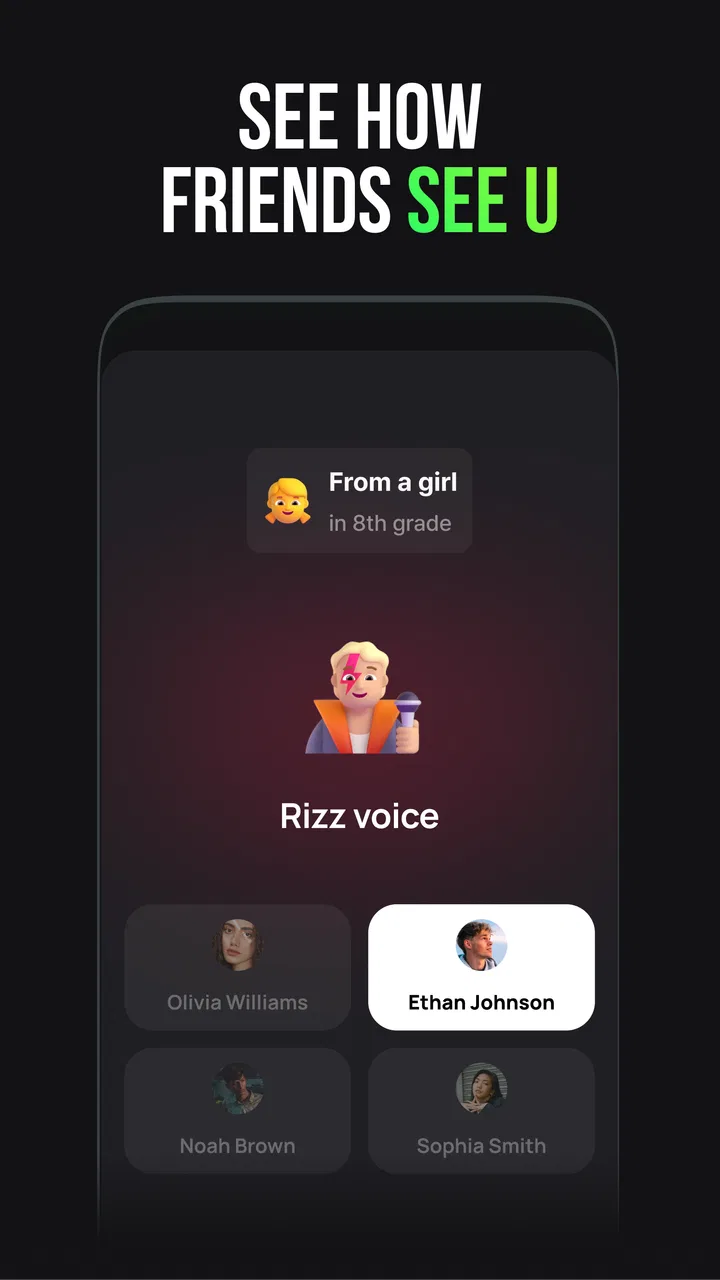
The central appeal is simple to understand. You encounter a poll about how friends see you, and responses are kept anonymous. That creates a small moment of curiosity: you are not just asking someone directly for an opinion, and you are not reading a public comment thread where every reaction has a visible author. The uncertainty is the feature, but it is also the main source of tension.
You May Also Like

 AccuWeather: Weather Radar
AccuWeather Review: A Quick, Clear Forecast for Everyday Decisions
For everyday plans, the best forecast is the one you can understand quickly. AccuWeather makes rain timing, radar, and local conditions easy to act on, with a few trade-offs.

 Hill Climb Racing
Why Hill Climb Racing Still Turns Crashes Into One More Run
A tiny car, a bumpy hill and one more upgrade: Hill Climb Racing keeps resurfacing because its simple chaos makes every near-miss feel personal.

 AliExpress - Shopping App
AliExpress Makes Global Shopping Feel Personal, but Shoppers Bear the Risk
AliExpress turns a global marketplace into a pocket-sized discovery engine. Its reach is useful, its shopping loop compelling, and its trade-offs easy to miss.

 Lords Mobile: Kingdom Wars
Lords Mobile Is a Kingdom-Building Routine, Not a Quick Match
A case-by-case verdict on the building, battles, device demands, and social commitments that make Lords Mobile rewarding for some players and exhausting for others.

 PDF Scanner app - TapScanner
TapScanner Makes Paperwork Easier to Capture, Check, and Share
TapScanner makes scanning with a phone feel less like a rescue operation and more like a dependable step in getting work done. Its capture tools are useful, though not flawless.

 Block Blast!
 Shows How Much a Puzzle Game Can Leave Out
A quiet grid game shows why puzzle players increasingly value instant clarity, repeatable skill and low-pressure play—and where the genre still needs to catch up.
More From Our News Desk
View All News


In my experience, the app becomes more engaging when a few people participate around the same time. A poll feels less like a solitary prompt and more like a shared activity when friends are already chatting, comparing reactions, or encouraging one another to answer. This is where the network connection matters most. The social value comes from fresh interaction, so waiting for a screen to update or trying to participate while the connection is unstable can interrupt the rhythm.
I would not approach it as an app to open repeatedly throughout the day in search of a large stream of content. Its appeal is concentrated in short visits: check a question, respond to a few prompts, and return later when your circle has had time to participate. That makes it a better fit for casual social bursts than for people who want an endlessly updating timeline.
A useful habit is to answer thoughtfully without trying to decode every anonymous response. Because the identity is hidden, users may project motives onto ordinary answers. If a question asks who is most likely to do something, the result may reflect the wording, the moment, or a joke among friends rather than a fixed judgment about your personality. Treating each result as a snapshot keeps the experience lighter and avoids turning a playful poll into a source of unnecessary worry.
The app comes from Dyve Studios and sits firmly in the social category. It is free to install, with optional in-app purchases ranging from less than a dollar to just under twenty dollars per item. That combination makes it easy to try with a group before deciding whether any optional extras are worth considering. I would still recommend checking each purchase carefully, especially if younger users are involved, because the basic social idea does not require spending to understand whether the app suits your circle.
Why a stable connection changes the experience
Peek depends on communication between the app and its online service for the parts that make it social: receiving current poll activity, sending responses, and seeing changes after other people participate. I found that the difference between a smooth connection and a weak one is not merely technical. When the app responds quickly, anonymous participation feels spontaneous. When it hesitates, the uncertainty becomes confusing: you may wonder whether a response went through, whether the poll changed, or whether the delay is simply a temporary connection problem.
This is especially noticeable when several friends are using it during the same conversation. Someone may mention a new result while your screen still shows an older state. In that situation, repeatedly tapping or resubmitting is not a good recovery strategy. It can make the experience feel less predictable and may leave you unsure about what was actually recorded. My practical advice is to wait briefly, check the screen again, and only retry once the connection is behaving normally.
That pattern also explains why the app is more enjoyable in places with dependable mobile data or Wi-Fi. A busy café, a crowded event, or a moving vehicle can turn a quick social check into a sequence of loading pauses. The app may still be useful in those settings when the connection is good enough, but I would not plan an activity around it if your group is likely to have unreliable service.
There is a subtle trade-off here. An anonymous poll feels immediate even though the interaction is mediated by a server. The user experience encourages a quick emotional reaction, while connectivity problems remind you that the result is not necessarily instant. Keeping that in mind helps prevent accidental duplicate actions and reduces frustration when a friend says something has appeared before it reaches your own screen.
Using it in ordinary mobile situations
The strongest everyday use case I found is a small friend group that is already together digitally or physically. Imagine a group chat during a quiet evening: someone opens a poll, friends answer between messages, and everyone checks the outcome later. Peek adds a structured prompt to a conversation that might otherwise drift. It is not trying to replace the chat; it gives the chat a question to react to.
Another good setting is a short break between activities. You can look at a prompt while waiting for a friend, during a commute with reliable service, or during a relaxed lunch. The compact nature of the interactions makes it easier to fit into spare moments than a long-form social network. I would avoid using it while walking, driving, or doing anything that needs your attention. Anonymous reactions can be emotionally distracting, and the app offers no reason to treat them as urgent.
Phone size and notification habits also shape the experience. On a smaller screen, the important part is the question and the response choice, so the app feels more focused than a feed packed with media. On the other hand, if you receive frequent prompts or reminders, the app can become more demanding than its simple concept suggests. I recommend keeping participation intentional: open it when you actually want to interact with your group rather than allowing every social prompt to dictate your attention.
For families, the Everyone content rating makes the app broadly accessible, but that does not remove the need for judgment. Anonymous social tools can be enjoyable for younger users, yet anonymity can also make teasing feel safer for the sender and harsher for the recipient. I would introduce it with a clear rule that answers should stay playful and respectful. If a child is already sensitive to peer approval, a direct conversation with trusted friends may be healthier than relying on anonymous feedback.
The current version is 2.5.1, and the app supports devices running Android 8.0 or later. That makes compatibility a practical consideration before inviting a whole group. If one person in a circle cannot install or run the app, the shared activity loses some of its appeal. I would check the device requirement first, particularly when organizing participation across older phones.
What to do when a poll or response seems stuck
Connectivity failures are not unusual in mobile social apps, so I judge them by how easy it is to recover without losing confidence. With Peek, the safest approach is deliberately slow. If a poll does not refresh, avoid repeatedly selecting the same answer. Move to a place with a stronger connection or switch between Wi-Fi and mobile data only if you normally have both available, then reopen the relevant screen and confirm its state.
If your response appears not to register, give the app a moment before trying again. A delayed result is less harmful than accidentally submitting multiple times or assuming that a missing update means the action failed. If the app closes or the connection drops during participation, return later and look for the latest visible state rather than reconstructing the sequence from memory. This is a small but useful workflow because anonymous interactions give you no author name to contact for confirmation.
There is also a social recovery step that many users overlook. If friends are comparing results and your screen looks different, do not immediately accuse the app of changing an answer or exposing someone. First consider that the screens may have refreshed at different times. A quick pause and a fresh check can prevent a technical delay from becoming an awkward group argument.
I would also avoid using the app for emotionally important questions. If you need an honest answer about a conflict, a relationship, or a personal concern, anonymity and connection delays are both poor foundations for that conversation. Use a direct message or face-to-face discussion instead. Peek is better at playful prompts where uncertainty is part of the fun and where an unclear result does not carry serious consequences.
Keeping mobile data and attention under control
Because the app is centered on polls rather than a large media feed, it feels naturally lighter than social platforms built around continuous video or image loading. Still, an online interaction uses connectivity, and repeated checking can turn a small app into a habit that consumes more attention than expected. If you are on a limited data plan, use it mainly when you have dependable Wi-Fi, especially during group sessions where people are refreshing frequently.
The bigger data-conscious issue is not just bytes; it is the amount of personal interpretation you attach to each response. Anonymous polls can encourage repeated checking because the missing identity creates an information gap. You may keep returning in the hope that another result will explain the first one. In my view, setting a simple boundary—check once, respond, then leave—makes the app more enjoyable and protects it from becoming a source of compulsive reassurance-seeking.
Be selective about the questions you answer. A prompt that reveals sensitive information may feel harmless because the response is anonymous, but the combination of the question, the friend group, and the timing can still make the subject recognizable. I would avoid entering anything that could expose another person’s private situation or turn a joke into a public accusation within the group. Anonymity changes who is visible, not necessarily how much context the group can infer.
Purchases deserve the same restraint. Since the app is free to use at its entry point but offers paid items, I would not spend simply to resolve curiosity about an anonymous result. The uncertainty is built into the concept, and buying something does not automatically make an impression more meaningful. If you do consider an optional item, decide beforehand what value it adds to your group’s actual use rather than treating payment as a way to gain emotional certainty.
Privacy-conscious users should also think about the kind of social circle they are inviting in. The experience is strongest among people you know well enough to understand the humor and boundaries. Adding a very broad audience may increase activity, but it can also make responses harder to interpret and increase the chance of uncomfortable questions. A smaller, trusted group is usually the better trade-off for both enjoyment and emotional safety.
Who will enjoy it, and who should choose something else
I recommend Peek to friends who like quick prompts, inside jokes, and low-pressure ways to start a conversation. It is particularly suitable for a group that already communicates elsewhere and wants an extra layer of playful interaction. The app gives that group a reason to check in without demanding a long post, a polished photo, or a public performance.
I would be more cautious recommending it to someone looking for dependable feedback. Anonymous answers are inherently limited: they can be sincere, but they can also be vague, impulsive, or shaped by the wording of a question. If your goal is meaningful advice, a private conversation, a moderated community, or a social app with visible identity may serve you better.
It is also not the best choice for users who dislike ambiguity. Some people find anonymous interaction exciting; others find it irritating because they cannot ask the responder what they meant. If you know you will keep analyzing every answer, the feature that makes Peek distinctive may outweigh its entertainment value.
Compared with ordinary messaging apps, this app offers more structure and mystery but less context. A chat lets you ask follow-up questions and understand tone; Peek gives you a quick reaction without that explanation. Compared with public social networks, it feels smaller and less performative, but it also has less room for detailed expression. And compared with anonymous question platforms, its poll format is easier to answer quickly, though it may provide less nuance than an open response.
That comparison clarifies its proper role. I would use it alongside a chat app, not instead of one. Start a conversation elsewhere, use a poll to add a playful question, and return to direct messages when a response needs clarification. This workflow preserves the fun of anonymity without asking the app to handle discussions it was not designed to replace.
My connectivity verdict after living with the concept
Peek: Secret Compliment succeeds when three things line up: a willing group, a stable connection, and a lighthearted attitude toward anonymous feedback. When those conditions are present, it turns a familiar friend circle into a source of small surprises. The best moments are not necessarily the most flattering results; they are the conversations that begin because a question made everyone reconsider how they see one another.
Its limits are just as clear. Network delays can make participation feel uncertain, repeated checking can become distracting, and anonymity is not a guarantee that every response will be kind or useful. I would not use it for sensitive decisions, serious relationship conversations, or situations where someone needs accountable feedback. A direct exchange is better whenever the identity and intention of the speaker matter.
The app has reached over fifty thousand installs and holds an average rating of four and a half from around eight hundred ratings, which suggests that its focused social idea has found an audience. It is rated for Everyone, but responsible group behavior still matters more than the label. My recommendation is to try it with a small circle, preferably when everyone has reliable service and understands the boundaries of playful anonymity.
The most important tip is to treat each poll as an invitation to connect, not a verdict about your relationships. If you can keep that perspective, the free entry point makes it easy to experiment with the format. If you need transparency, detailed conversation, or complete control over who says what, choose a conventional messaging or social platform instead. For the right group, though, this compact social app adds a distinctive spark without requiring a full-time feed.
FAQs for Peek: Secret Compliment
01What is Peek: Secret Compliment and how does it work?
Peek: Secret Compliment is a social app focused on sending and receiving anonymous compliments. After creating a profile, you can share a personal link or invite friends to leave messages. Compliments appear inside the app without immediately revealing who sent them, creating a playful and curiosity-driven experience. The exact features may vary by region and app version, so checking the current store description is recommended before downloading.
02Are compliments on Peek really anonymous?
The app is designed around anonymous compliments, meaning the recipient normally sees the message without the sender’s name attached. However, anonymity should not be treated as an absolute guarantee. Technical information may still be available to the service, and optional hints or paid features could potentially reveal clues, depending on the version. Avoid sharing private details and review the privacy policy before using the app.
03Is Peek: Secret Compliment free to download and use?
Peek can generally be downloaded at no initial cost, but some functions may be limited or supported by advertising, in-app purchases, or premium options. Features such as additional hints, customization, or expanded interaction tools may require payment. Before confirming a purchase, review the price, subscription terms, renewal settings, and cancellation instructions shown through Google Play or the App Store.
04Is Peek: Secret Compliment safe for teenagers and younger users?
The app may be entertaining for teens, but anonymous messaging can also lead to unwanted, offensive, or misleading comments. Parents and younger users should check the listed age rating, privacy controls, reporting tools, and blocking options before creating an account. Do not publish sensitive information, school details, phone numbers, or location data, and report any threatening or inappropriate message immediately.
05What should I do if I receive an offensive compliment or want to delete my account?
If a message is abusive, threatening, or inappropriate, avoid responding and use the available report, block, or moderation tools. You can also contact the app’s support team through its in-app help section or store listing. To remove your profile, look in the account or privacy settings for a deletion option. If no direct option is available, request deletion from support and review the privacy policy for data-retention details.
Pros
- Anonymous compliments can help users express positive feelings comfortably.
- Simple interface makes sending and viewing compliments easy.
- Short messages keep interactions quick and lightweight.
- Can encourage kinder
- more positive conversations among friends.
- Useful for playful interactions within a familiar social circle.
Cons
- Anonymous messages may encourage teasing or unwanted comments.
- Limited context can make compliments difficult to interpret.
- Requires friends or contacts using the app for the best experience.
- Notifications may become distracting with frequent activity.
- Privacy concerns may arise when sharing personal social connections.

Peek: Secret Compliment
Gallery